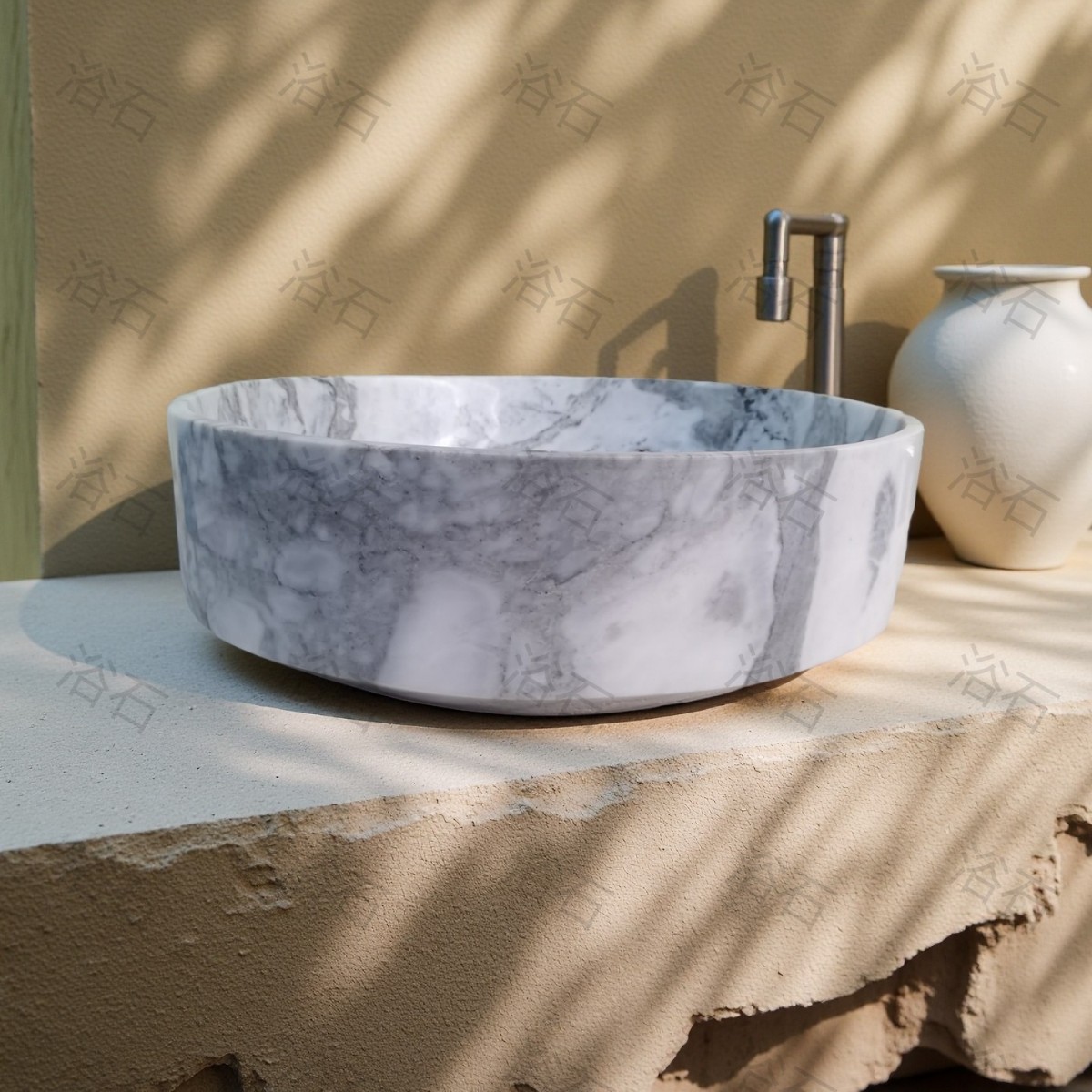
what actually keeps a stone sink looking new
Wipe the basin dry after use. Ninety per cent of "my marble sink looks stained" complaints are water left to evaporate.
Clean with pH-neutral soap or a dedicated stone cleaner. Never vinegar, never citrus, never descaler, never bleach on marble or travertine.
Blot stains, do not scrub. Stone is porous; scrubbing pushes the substance deeper.
Re-seal honed and porous stones every 12–24 months with an impregnating sealer. Polished granite rarely needs it.
Deal with oil and rust immediately. Oil on travertine leaves a shadow that can take weeks to fade.
Accept etching on marble. A faint matte ring where a soap dish stood is normal patina, not damage, and it can be polished out if it bothers you.
For a family that wants zero maintenance, granite or basalt is the correct answer. For a family that wants marble, honest advice beats a sealer claim.
What a stone sink costs, and why the range is so wide
Small bathrooms, powder rooms, and the single-basin layout
Console + wall-mounted tap. The wall tap shortens the counter depth you need by 60–80 mm, which is often the difference between a usable corridor and a cramped one.
Monolithic plinth basin. A carved block standing on the floor removes the vanity entirely. Storage moves to a niche or a slim wall cabinet.
Undermount in a narrow stone top. If floor space is tight, an undermount stone basin in a 400 mm deep counter keeps the footprint minimal and the rim low.
Avoid the temptation to buy an oversized sculptural basin for a small room. In a powder room, proportion beats drama — though if you do want drama, a backlit onyx basin is the one indulgence that earns its space.
Sourcing a stone sink: the factory checklist
Ask for the block reference. A photo of the actual block or slab the sinks were cut from tells you more about colour consistency across a batch than any sample photograph.
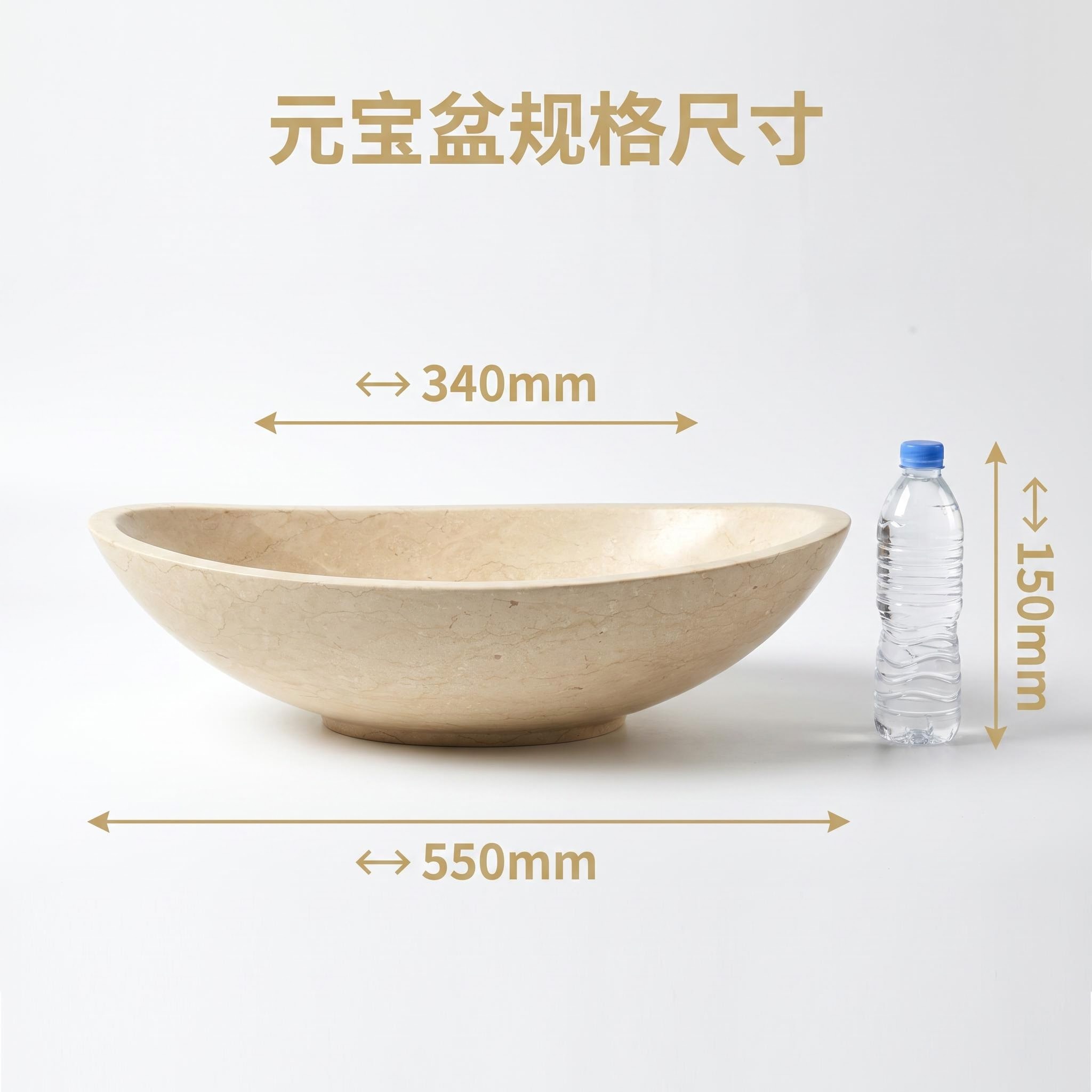
Request a dimensional report per unit. Outer dimensions, inner bowl dimensions, wall thickness, drain diameter, and weight. If a supplier cannot produce this, they are assembling, not manufacturing.
Insist on a water test. Fill, drain, and check the joint and the underside for damp patches before packing.
Confirm packing standard. Stone basins need foam corner protection, individual cartons, and a plywood crate for anything above a few units. Sea freight with poorly protected stone is how "minor chips" become chargebacks.
Clarify what is not included. Waste, overflow kit, tap, and mounting adhesive are usually not. Say it in the quotation, not in the follow-up email.
Check finish consistency across the batch. Honed finishes from different polishing lines do not match. Ask for one finish run per order.
A supplier who volunteers the drain diameter and the wall thickness before you ask is usually a supplier who has done this before.