
Elevate Your Bath Space
This comprehensive guide explores everything you need to know about natural stone sinks and bathtubs: the best materials, popular design styles, structural considerations, maintenance guidelines, and how to choose the perfect piece for your space at
1. The Enduring Appeal of Natural Stone in Luxury Bathrooms
When designing or renovating a bathroom, materials dictate the sensory experience of the room. Synthetic alternatives like acrylic, glass fiber, or porcelain can mirror modern shapes, but they cannot replicate the organic weight, tactile warmth, and visual texture of genuine quarried stone.
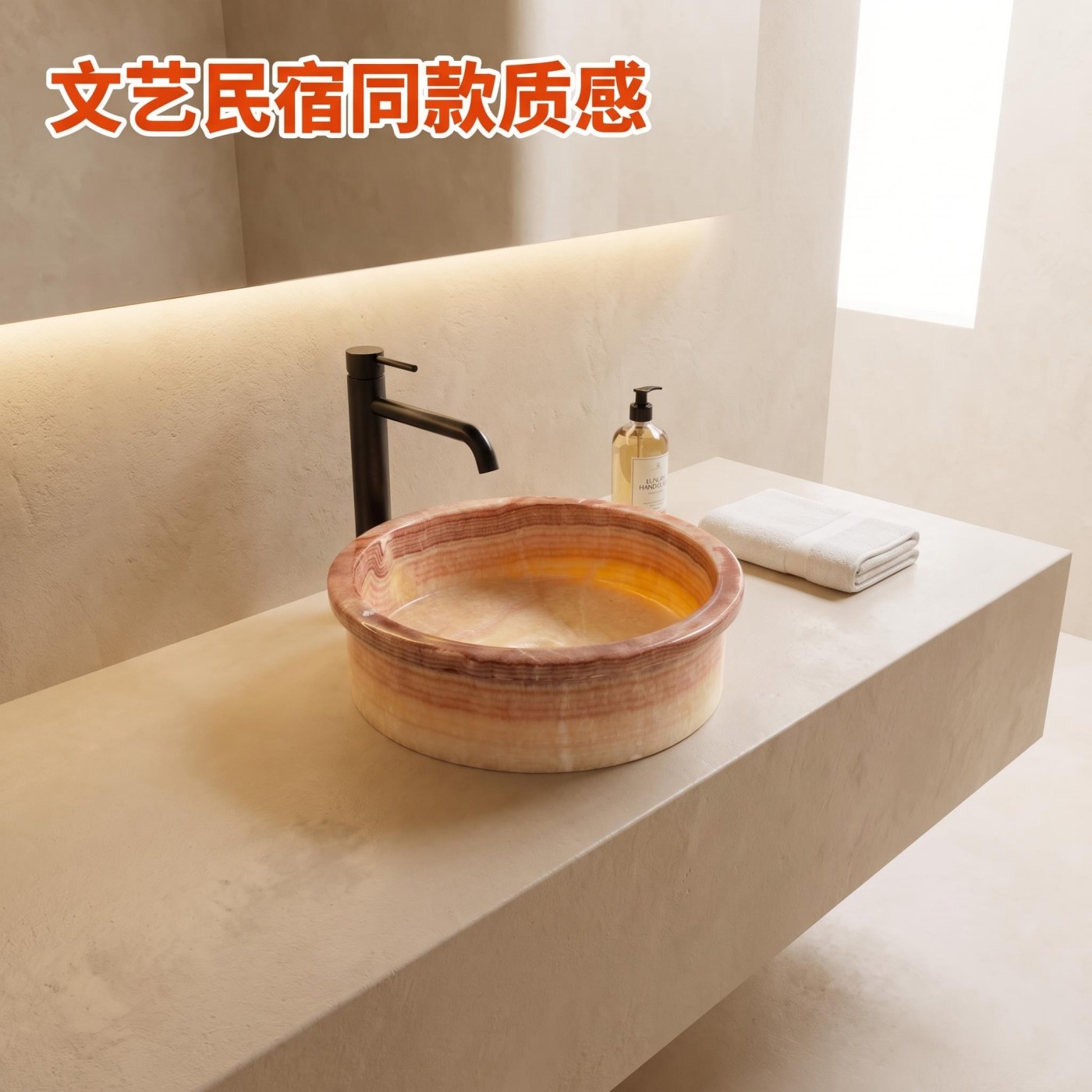
Key Advantages of Natural Stone Fixtures
Unrivaled Uniqueness: Because natural stone is forged deep within the Earth over millennia through heat and pressure, no two slabs or blocks are identical. Variations in veining, mineral deposits, color intensity, and texture guarantee that your sink or bathtub is a one-of-a-kind art piece.
Exceptional Longevity: Natural stone is structurally robust. High-density stones like granite, basalt, and dense marbles withstand heavy daily use, thermal fluctuations, and physical impact better than synthetic composites.
Thermal Heat Retention: Solid stone possesses a high thermal mass. A natural stone bathtub absorbs heat slowly from warm water and holds that temperature significantly longer than thin acrylic or metal tubs, extending your bath without needing continuous hot water refills.
Biophilic and Organic Aesthetics: Modern interior architecture increasingly favors biophilic design—the practice of connecting indoor environments with the natural world. Natural stone introduces raw, grounding elements into residential spaces, promoting wellness and relaxation.
Property Value & Prestige: Installing custom natural stone fixtures increases the perceived and actual value of a property, signaling meticulous attention to material selection and luxury craft.
2. Material Deep-Dive: Choosing the Right Stone
Selecting the right natural stone depends on your aesthetic preferences, budget, functional requirements, and willingness to maintain the surface.
| Stone Type | Primary Aesthetics | Key Strengths | Best Suited For |
| Marble | Elegant veining, classic white/gray or rich hues | Timeless design, high polish potential | Master vanities, luxury freestanding tubs |
| Granite | Speckled, crystalline, consistent tones | Extreme hardness, stain resistance | High-traffic bathrooms, modern minimalist sinks |
| Travertine | Earthy beige, rustic pitting, warm undertones | Organic warmth, Old-World charm | Mediterranean, rustic, and spa-inspired designs |
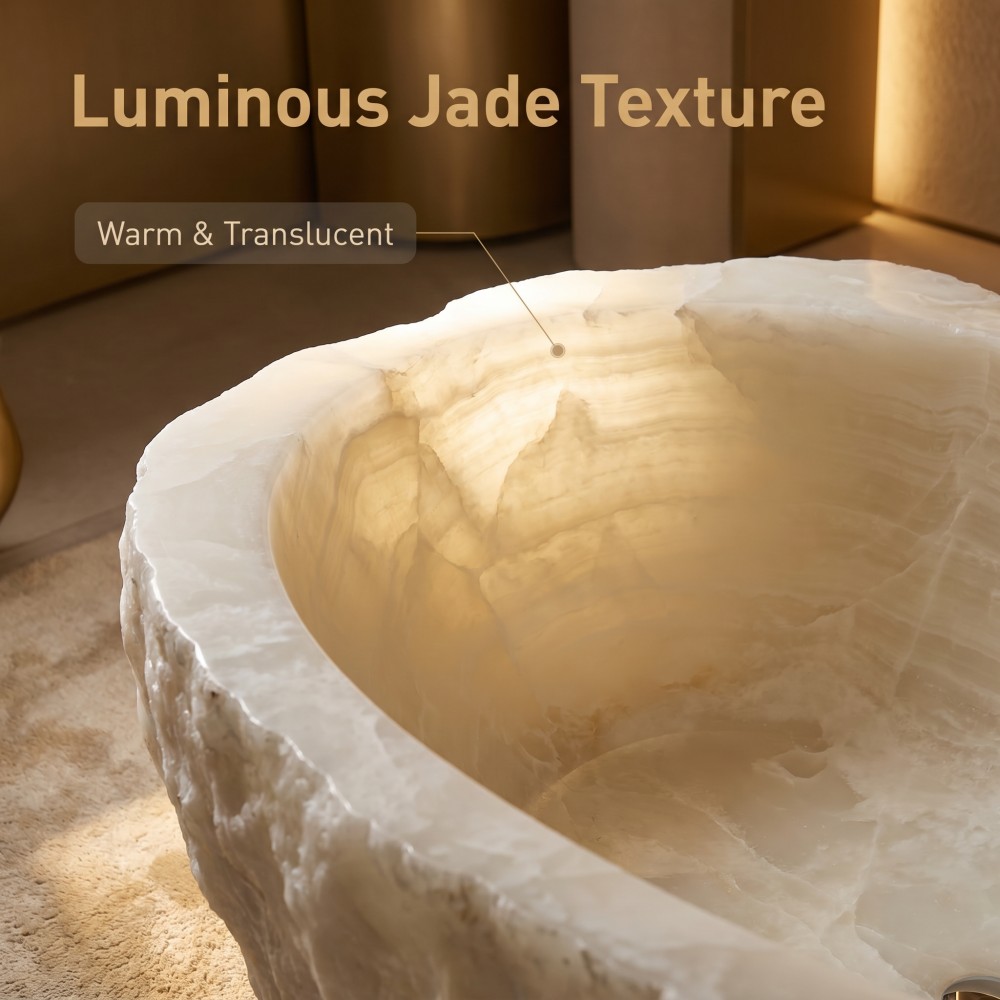
| Onyx | Translucent, dramatic bands, exotic colors | Backlighting compatibility, luxury impact | Statement powder room sinks, luxury feature tubs |
| Basalt / Limestone | Dark matte charcoal, muted minimalist tones | Uniform tone, contemporary feel | Japandi, modern organic, industrial spaces |
Marble: The Benchmark of Classic Luxury
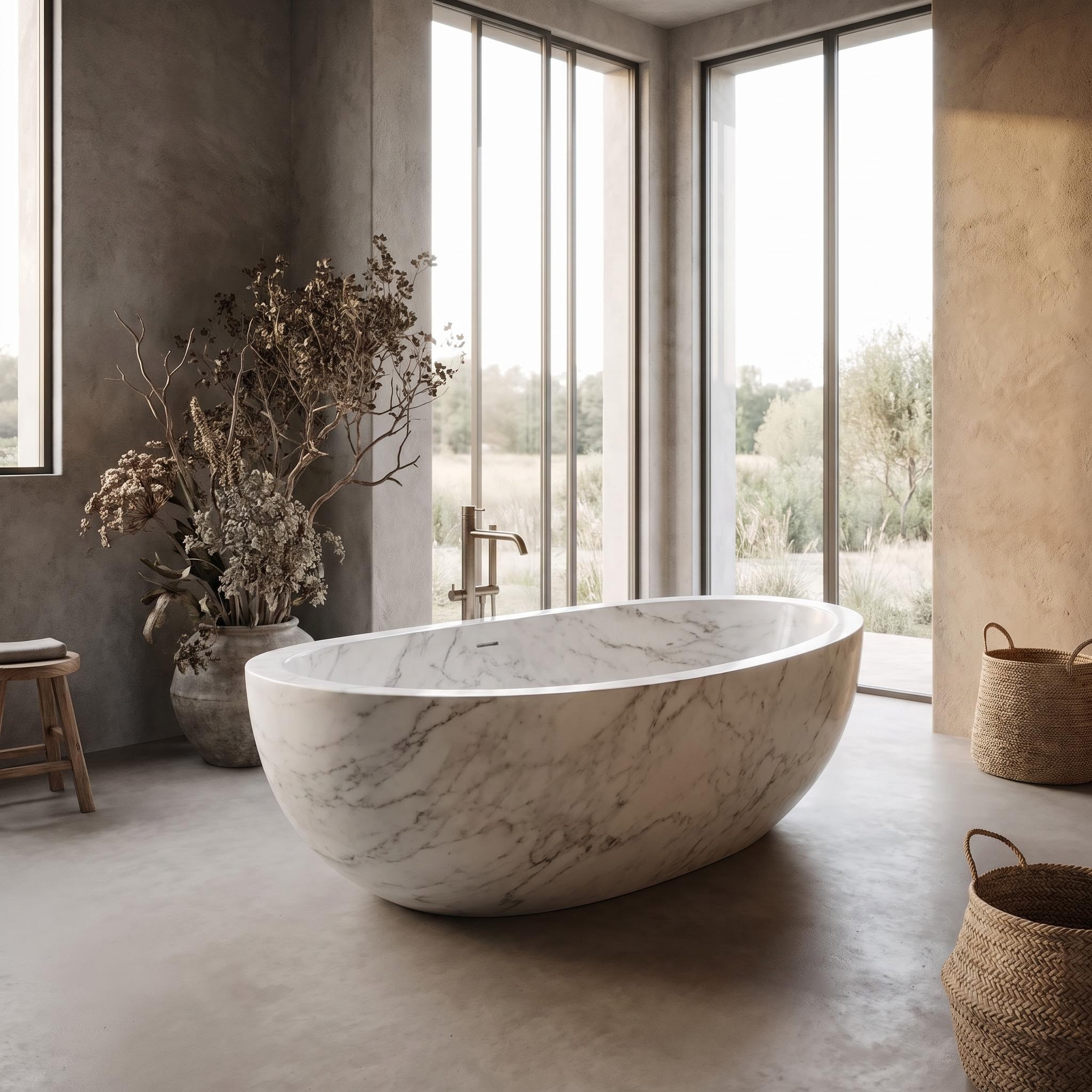
Marble is synonymous with luxury. Characterized by soft to dramatic veining and a smooth, cool touch, marble works seamlessly across traditional, transitional, and contemporary spaces.
Carrara & Calacatta: Renowned Italian marbles featuring crisp white backgrounds with delicate gray or bold gold veining.
Nero Marquina: A dramatic black marble from Spain accented by striking white veins, perfect for high-contrast modern vanities.
Crema Marfil: Warm beige tones that suit warmer color palettes and traditional European design.
Granite: Unmatched Strength and Resilience
If durability is your primary concern, granite is an exceptional choice. Composed mainly of quartz and feldspar, granite resists scratches, heat, and staining remarkably well.
Aesthetics: Available in a vast spectrum ranging from deep jet black (Absolute Black) to speckled grays, deep reds, and forest greens.
Finishes: Looks striking in a mirror-polish finish, but takes on a sophisticated matte aesthetic when honed or leathered.